

Lake Champlain has always been part of Colleen Hickey’s story, beginning with childhood summers at a family home on the Georgia, Vermont lakeshore fondly known as “camp.”
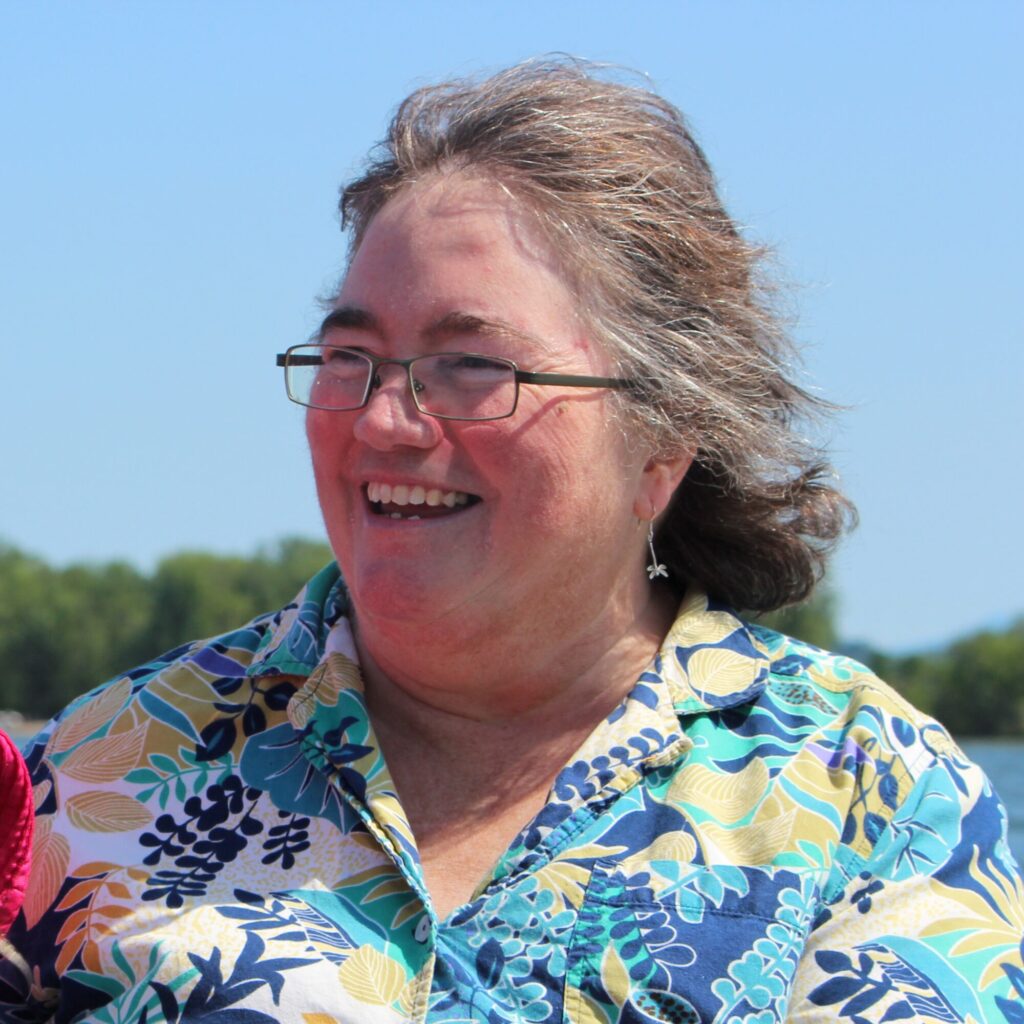
After earning a master’s degree in urban and environmental policy from Tufts University, Colleen returned to camp, using it as her home base for the summer. She had started as an intern with EPA during her second year of graduate studies, and following graduation was enlisted to continue working on the early efforts of the Lake Champlain Management Conference. The Conference would later evolve into the Lake Champlain Basin Program (LCBP)—a NEIWPCC Program Partner.
Just a year later, in 1992, NEIWPCC hired Colleen as an intern with the Conference—technically a step down from her prior role with EPA. “And what a great step down that was,” Colleen shares with a smile, “because it launched 32 years.”
Colleen came on board during a challenging yet formative period. After decades of declining water quality and ecosystem health, concern for the lake had come to the fore of public awareness. The need for coordinated effort was clear, but a growing wariness around increased regulation made for a complex landscape. Upon joining the Conference Colleen quickly jumped into a major outreach effort, facilitating sometimes contentious public meetings with hundreds of residents across the watershed.
“She experienced the rather rough time that marks the beginning of the effort to bring people together,” shares former Program Director William (Bill) Howland. “She weathered all of that… and I think that was the crucible that, in a way, informed her approach.”
Colleen’s approach stems from a remarkable ability to connect with just about anyone—and build rapport and shared understanding. In the early years, her skillful mediation helped build trust and laid the groundwork for the 1996 release of the first Opportunities for Action management plan.
Shortly after the plan’s release, what would become the Education and Outreach Coordinator position opened. “I applied and interviewed with a panel of 12 people,” Colleen recounts, “and got the nod and started in a different capacity.”
During her tenure as Education and Outreach Coordinator, Colleen focused on coordinating media outreach, school programs, educator trainings, and public outreach programs that improved understanding of the Lake Champlain watershed.
While the topics have varied widely between programs, Colleen’s work has revolved around one core belief: that everyone can help protect the lake.
“When you think about the 32 years that Colleen has been educating people on Lake Champlain—many of them children—and the long-term impact that has had across Quebec, New York and Vermont, it’s pretty amazing,” says NEIWPCC Executive Director, Susan Sullivan. “People remember the passion that Colleen brings to the table in her communication, education and outreach work.”
“She loves the lake—and that affection for the lake and water quality permeates everything she does,” Bill shares.
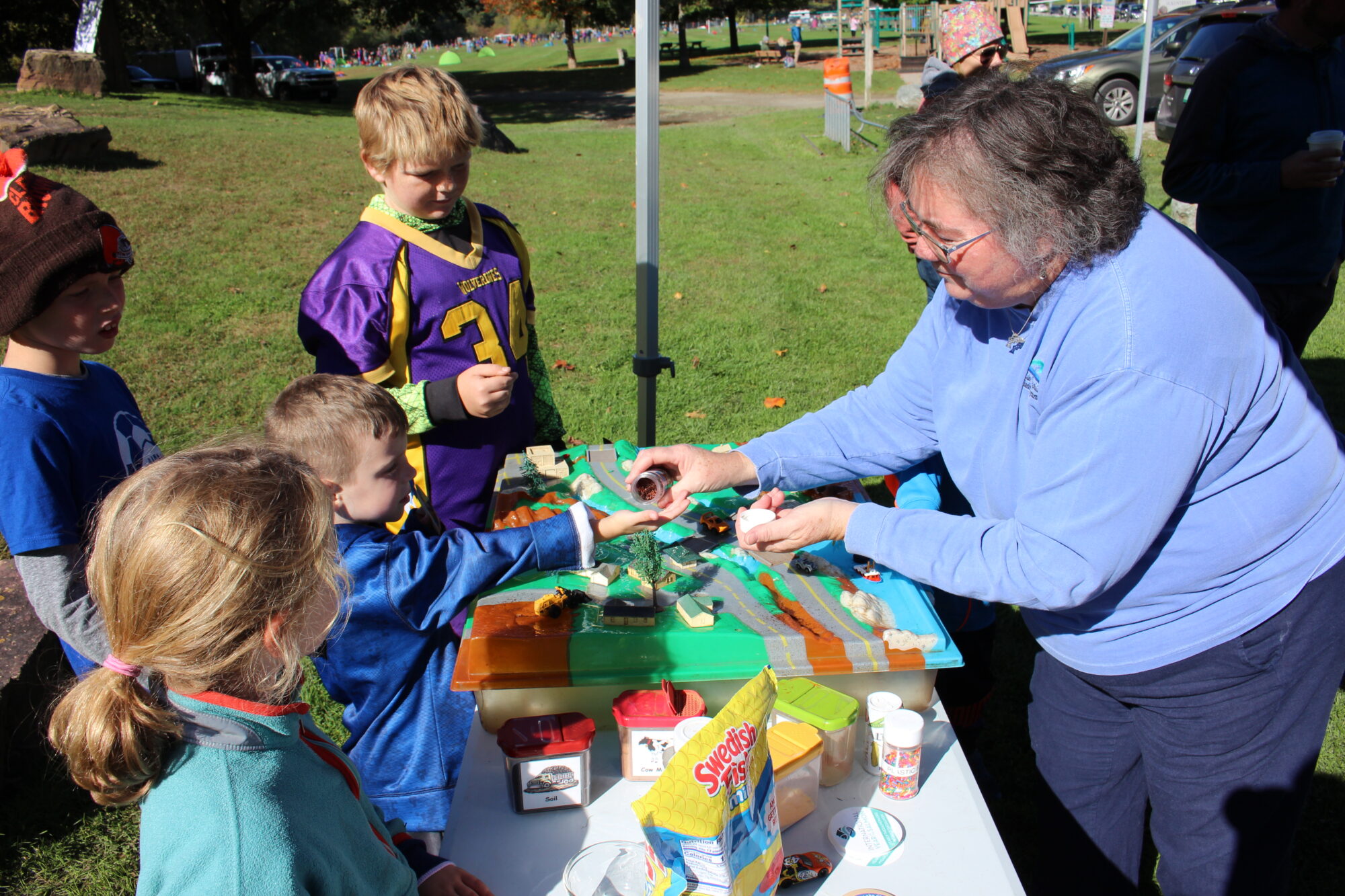
Between the programs that Colleen has created and implemented, the staff she has supervised, and the partner initiatives she has supported, Colleen’s work has reached tens of thousands of individuals. It’s an extraordinary legacy—but true to form, Colleen consistently redirects the spotlight, lifting up the partners she’s worked alongside over the years.
“She’s always thinking about the people that she works with first,” shares Eric Howe, Program Director of the LCBP. “She has developed these amazing, long-lasting connections and friendships with many of the partners who we work with around the Basin.”
“When we have 600,000 people who live here and 8,234 square miles of land draining into the lake,” Colleen says, “it’s clear we can’t do it alone and never have been able to.”
One of Colleen’s major achievements was the establishment of the Champlain Basin Education Initiative (CBEI), a consortium of environmental and place-based education groups throughout the Lake Champlain Basin. Since 1992, CBEI partners have facilitated workshops and trainings for K-12 educators and interested citizens.
The consortium’s signature program, Watershed for Every Classroom (WEC), provides Basin educators with the tools to teach about the natural and cultural history of the watershed. Today, WEC is co-facilitated by education experts from Shelburne Farms and Lake Champlain Sea Grant, with crucial programming support coming from the Lake Champlain Maritime Museum, Community Sailing Center, and Lake Champlain Committee. Over 100 teachers have taken part in this transformative course, and each school year their students learn to become stewards of the lake.
“The amount of leverage we get by training teachers is pretty phenomenal,” Colleen reflects.

In the mid 1990’s, Colleen joined the effort to establish a science center that would bring together key partners on the Burlington waterfront. This space would become the ECHO Leahy Center for Lake Champlain, which shares a building and partners closely with the University of Vermont Rubenstein Laboratory. The ECHO Center also houses the Lake Champlain Resource Room, an educational space staffed by members of the LCBP team.
Julie Silverman, Lake Champlain Lakekeeper with the Conservation Law Foundation, spent twenty years developing and growing the ECHO Center’s educational programs and exhibits, and recalls the “deep collaboration” Colleen brought to the effort. “We just did pretty much everything together,” Julie recalls. She notes, too, that Colleen kept the focus on students as the center grew, always asking “Who’s the audience? Let’s make sure we’re putting them first.”
By the late 1990’s, members of the public were wondering what had become of the Management Conference. Meanwhile, the newly renamed Lake Champlain Basin Program was trying to rebuild following a fire that destroyed its office.
To highlight the work still being done on lake issues, Colleen helped launch a weekly news segment that brought lake issues into homes across the region. She reached out to WPTZ reporter Stewart Ledbetter to pitch a Lake Champlain news segment. The series, first titled Champlain 2000 and later renamed Champlain Connection, was picked up by the local NBC affiliate and aired weekly during the highest-viewership slot on Monday evenings.
The series earned numerous accolades, including Environmental Quality Awards from EPA Region 2, recognition from New York State Department of Environmental Conservation, an EMMY nomination, and two regional Edward R. Murrow Awards. It continues to air today.
Never one to rest on her laurels and always looking for new opportunities to partner, Colleen helped launch the Lawn to Lake initiative, which encourages homeowners to take actions that help improve water quality. Don’t “P” on Your Lawn—a campaign to promote the use phosphorus-free fertilizer—came together in 2006. In 2015 the collaborative initiated the Raise the Blade campaign to encourage people to let their grass grow longer, improving soil health and reducing runoff.
Since 2019, Colleen has overseen seasonal Education and Outreach Stewards who bolster the Program’s outreach capacity through the summer months and help keep the Resource Room running nearly every day of the year. The role has kicked off (or advanced) environmental careers for numerous individuals, including several who went on to join the Program in a full-time capacity.
Educating the public on lake issues is an ongoing effort, and each new generation of outreach professionals will have to adapt to emerging challenges. While progress can at times seem frustratingly nonlinear, advances in environmental literacy and action within the Lake Champlain watershed have certainly been made over the last 30 years—thanks in no small part to Colleen’s efforts, and her ethos of moving forward together.
“All of these concepts—watersheds, place-based education, stormwater management—are much more a part of the public lexicon today than they were when Colleen began working on them in the 1990’s,” shares Lori Fisher, former Executive Director of the Lake Champlain Committee. “That progress is due in part to the diverse partnerships Colleen has helped cultivate and strengthen. She has also played a key leadership role in ensuring these collaborations are sustained and well-positioned to thrive into the future.”
Finally, while it may not appear in her job description, Colleen has been a mentor and cheerleader to every member of the LCBP team.
“Colleen has been a mentor for me for the last 15 years, and helped me when I first started with the Basin Program,” says Eric. “She helped coach me through media interviews, and I’ve seen her do that with many of our staff since then. And as I transitioned into the Director position, Colleen helped me to manage the Program and the team.”
In recognition of Colleen’s dedication and service to NEIWPCC and the LCBP, she received an official resolution authorized by the NEIWPCC Executive Committee and Commissioners. In 2020, Colleen was recognized by the EPA with a Lifetime Achievement Award for a career or life devoted to protecting the New England environment.
After retiring, Colleen will spend winters close to family in Goffstown, New Hampshire. Summers will be spent much as they were in her childhood, and throughout the last three decades: at camp, enjoying the lake she has spent 32 years protecting.
When asked what has motivated her all these years, Colleen emphasizes the deeply personal connections that people have with Lake Champlain. “People enjoy the lake in a variety of ways,” she shares. “For me, it was always about being in the lake and swimming in the lake, in the quiet of the water, or the joy of jumping into big waves—and always keeping an eye out for Champ.”